Good to know: Labuan Bajo Dive Cruise is operated by Komodo Luxury, a real award-winning Indonesian liveaboard operator (TripAdvisor Travelers’ Choice 2022–2025, founded 2015, part of Juara Holding Group Limited). Komodo National Park (UNESCO 1991) requires park entry fees/permits — general information, verify current rates. Dive-site conditions and seasons are indicative and vary; Komodo currents are strong and many north sites are advanced. Marine life — mantas, hammerheads — is seasonal and wild, and can never be guaranteed. Prices are indicative ranges, by quote, and vary by vessel, cabin, season and trip length. Enquiries and booking via WhatsApp +62 811-3823-875 and [email protected].
Komodo dive cruise safety means understanding the park’s strong currents, planning dives to each guest’s experience level, and using professional boats, guides and procedures to manage risk. On a Komodo diving safety cruise with a serious operator, the focus is on matching sites to skills, timing tides precisely, and making conservative calls when conditions change.
Why Komodo Has a Reputation for “Serious” Diving
Komodo National Park is one of Indonesia’s most dynamic marine environments. That is exactly why the reefs are so healthy—cold upwellings, ripping currents and big tidal exchanges—but it’s also why “is Komodo diving safe?” is a fair question.
Key realities:
- Currents can be very strong and change direction with the tide.
- Some sites are genuinely advanced and not suitable for new divers.
- Weather, visibility and plankton (for mantas) shift with the monsoon seasons.
- You are far from big-city medical facilities; evacuation planning matters.
Safety in Komodo is not about eliminating risk—this is still wild ocean—but about informed choices and disciplined execution: correct sites, correct time, correct divers, correct equipment.
Who We Are: Komodo Luxury & Labuan Bajo Dive Cruise
Labuan Bajo Dive Cruise is the dedicated diving arm of Komodo Luxury, a specialist in private and shared luxury phinisi charters based in Labuan Bajo.
Komodo Luxury facts (verifiable, not inflated):
- Founded: 2015, under Juara Holding Group Limited
- Home port: Labuan Bajo, Flores – gateway to Komodo National Park
- Fleet: Two luxury phinisi liveaboards – Komodo Signature and Komodo Prestige
- Focus: Komodo dive cruises and leisure charters, year-round
- Recognition: TripAdvisor Travelers’ Choice Awards 2025 and 2026 on the Komodo Luxury listing
Our role at Labuan Bajo Dive Cruise is simple: plan and guide serious, yet enjoyable, multi-day dive itineraries through Komodo from our base in Labuan Bajo, with safety as the non‑negotiable starting point.
If you want help matching your skill level to a specific itinerary, message our team on WhatsApp at +62 811-3823-875 or plan your trip.
Is Komodo Diving Safe? The Honest Answer
Komodo diving is safe for properly trained divers on the right sites, at the right tides, with a competent liveaboard and guides. It is not a good training ground for your first post‑certification “adventure” if you barely remember how to deploy an SMB or manage buoyancy.
Think of it this way:
- Open Water divers: Safe if you stay on beginner‑friendly sites and accept that you will sit out some advanced dives.
- Advanced/Rescue divers with current experience: Komodo is demanding but very rewarding under professional supervision.
- Non‑certified snorkelers: Safe on the right spots from a liveaboard that respects currents and uses tenders correctly.
Any operator that tells you “Komodo is easy for everyone, every site” is not being honest with you.
Komodo Conditions That Affect Safety
Currents & Tides
Komodo sits in the main flow of the Indonesian Throughflow between the Pacific and Indian Oceans. Tidal exchanges squeeze between islands and headlands, creating:
- Horizontal currents that can exceed most divers’ comfortable swimming speed
- Vertical downcurrents and upwellings on walls and corners
- Eddies and washing‑machine effects on some underwater pinnacles
That’s why we plan dives around tides, not just the clock. If the timing for a classic site will put the group into a known “ripping” period, we adjust or cancel. No reef is worth an uncontrolled ride into blue water.
Water Temperature & Visibility
Komodo is not uniformly warm.
- North & some central sites: often 27–29°C with generally clearer visibility.
- South & some central/southern channels: thermoclines can drop below 24°C, sometimes even lower, with reduced visibility.
Thermoclines themselves are not a safety issue, but cold divers are distracted divers. We recommend:
- 5 mm full suit as a comfortable standard for a full‑week cruise
- Hooded vest or beanie for those who chill easily
- Spare warm layer for surface intervals; winds can be surprisingly cool
Visibility can range from crystal‑clear in the north to green and plankton‑rich in the south, especially during strong upwellings. Low vis requires tighter group discipline and good light usage.
Remoteness & Emergency Response
Komodo National Park was established in 1980 and became a UNESCO World Heritage Site in 1991. It is still remote. Key safety implications:
- There is no hyperbaric chamber inside the park.
- Evacuation to a chamber typically involves transfer back to Labuan Bajo, then onward depending on medical advice.
- Helicopter evacuation is not something to assume as standard or immediate.
So our approach is conservative: avoid decompression diving, keep gas reserves healthy, and cut dives or change plans at the first sign of elevated risk.
How a Serious Komodo Dive Cruise Manages Safety
Boat & Crew Standards
Komodo Signature and Komodo Prestige are purpose‑built luxury phinisi liveaboards designed for multi‑day operation in Komodo’s sea state. For safety, that translates to:
- Solid hull and engine maintenance schedules
- Dedicated dive deck and zodiac/tender support
- Oxygen kits, first‑aid equipment and radios on board
- Crew trained in basic life support and emergency procedures
Luxury is nice. But in Komodo, I care more that the compressors are serviced, the tender drivers actually watch their drift lines, and the crew can run a realistic man‑overboard drill.
Guides, Ratios & Briefings
Komodo is not a place for “local boat guy becomes dive guide overnight.” Professional dive‑leader practices we apply:
- Briefings that include: current expectations, emergency signals, drift pickup plan, depth/time limits, separation procedures, and specific site hazards.
- Sensible guide‑to‑diver ratios depending on experience and conditions.
- Positioning: one guide leads, one stays mid‑pack or rear when needed.
We also treat night diving conservatively: we choose sheltered, current‑protected sites and confirm everyone’s comfort with basic night procedures before splashing.
Equipment & Redundancy
On a Komodo dive cruise safety is enhanced by redundancy and readiness. We expect and encourage:
- Each diver: SMB (surface marker buoy) and spool/reel, audible signaling device (whistle), cutting tool, and light for dusk/night/low‑vis.
- Group: extra SMBs, spare lights, spare masks, and clearly labeled tanks.
- Boat: sufficient oxygen for multiple divers, not just a token cylinder.
If your SMB skills are rusty, we practice on an easier dive before we need them in current.
Typical Komodo Dive Sites by Difficulty & Risk Profile
The exact depth and conditions of a site vary with tides, season and day. The table below is indicative only, based on common practice among cautious operators:
| Area / Site (Example) | Indicative Depth Range | Typical Conditions | Recommended Minimum Level | Safety Notes |
|---|---|---|---|---|
| North Komodo – Easy reef (e.g. sheltered bay) | 5–18 m | Generally mild current, good vis | Open Water | Good for check dives & training; practice SMB use. |
| Central Komodo – Reef & slope sites | 10–25 m | Variable current, some surge | Advanced Open Water or equivalent | Plan for drift pickups; stay close to guide. |
| Central Komodo – Manta cleaning stations | 5–20 m | Moderate current, sometimes split current | Advanced with good buoyancy | Focus on reef hooks & not chasing mantas; wildlife never guaranteed. |
| North Komodo – Exposed pinnacles | 15–30+ m | Strong currents, potential downcurrents | Advanced/Rescue with current experience | Strict timing with tide; negative entries may be required. |
| South Komodo – Cooler, nutrient‑rich sites | 10–25 m | Cool thermoclines, variable vis & surge | Advanced | Thermal protection important; stay close in lower vis. |
Remember: “advanced” here does not just mean a plastic card. It means comfort with:
- Negative entries in light chop
- Controlled descents/ascents in current
- SMB deployment in open water
- Staying with the group at 5 m in a swell
Trip Length, Training Level & Safety Margin
Longer trips allow us to step divers up gradually instead of throwing them into everything at once. Here is how we typically think about trip length, training and safety margin:
- 3D/2N or 4D/3N Komodo Dive Cruise
- Good for Advanced divers with some current experience. We prioritize easier central/northern sites first, may include one or two higher‑energy sites if the group is ready. Open Water divers can join on selected dives but will likely skip the most current‑exposed sites.
- 5D/4N to 6D/5N Cruise
- Ideal for a mix of Advanced and confident Open Water divers. Safety margin improves because we can choose the best windows for classic sites and repeat areas you enjoy at gentler tides. Great for manta‑focused trips in season, plus one or two “spicier” drifts for those ready for it.
- 7D/6N or longer “Full Komodo” Itinerary
- Best for Advanced/Rescue divers keen on experiencing the full range of Komodo, including cooler southern sites and more challenging northern drifts when appropriate. Longer duration gives maximum flexibility for weather and tide‑based safety decisions.
For non‑divers and snorkelers, longer itineraries also give more options to choose gentle reefs and bays at any given tide cycle.
Seasonality, Wildlife & Safe Expectations
Manta Rays
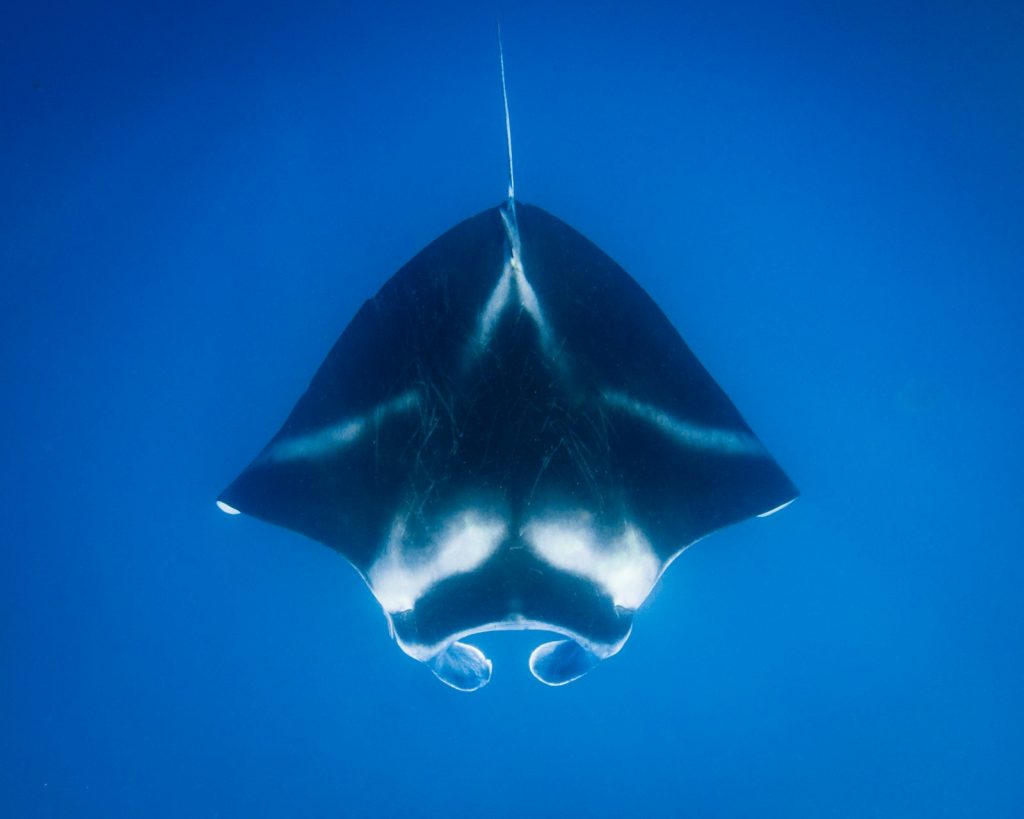
Komodo is famous for mantas, but manta presence is seasonal and influenced by plankton and currents. Some central and southern sites offer higher chances at certain times of year, yet:
- Mantas are wild animals. No operator can guarantee them.
- Sometimes you will see none; sometimes you will have multiple passes.
- Safety at manta sites still matters: currents, boat traffic and diver crowding can all become hazards if mis‑managed.
We emphasize staying low, avoiding chasing or blocking mantas, and following agreed signals for regrouping and ending the dive.
Hammerheads & Pelagics
Occasional reports of hammerheads and other pelagics appear from deeper, cooler parts of Komodo, typically involving:
- Early morning starts
- Slightly deeper profiles
- Less‑visited areas with fewer boats
These are specialized dives, not standard for all cruises, and clearly on the advanced side in both skill and risk profile. Again, nothing is guaranteed; you plan the dive safely for conditions, not for a specific shark.
Monsoon Seasons & Site Choice
Komodo is diveable year‑round, but the character of the diving changes:
- Typically “drier” season: better overall visibility in many areas, more stable surface conditions; some southern sites may be rough.
- Typically “wetter” season: more plankton in some regions (can improve manta food), potentially rougher surface conditions in others.
Each season offers safe diving, but not necessarily in the same part of the park on every trip. Safety‑minded planning means we may adjust the balance between north, central and south based on winds and swell as much as on your wish list.
Certification, Skills & Honest Recommendations
Minimum Certification
For a typical Komodo dive cruise safety baseline, we strongly recommend:
- Advanced Open Water (or equivalent) with recent dives
- At least 30–50 logged dives before tackling the classic current‑exposed sites
- Rescue Diver certification for those who want to attempt the most advanced drifts
Open Water divers can certainly enjoy Komodo, but:
- You will be limited to more sheltered reefs and easier drifts.
- Some signature sites will be off‑limits for your own safety.
- You should be honest about your experience; lying on forms helps no one.
Skill Tune‑Up Before Komodo
To get the most from a Komodo diving safety cruise, I suggest you arrive ready, not rusty:
- Practice SMB deployment from 5 m in moderate water.
- Get comfortable in a 5 mm suit, including proper weighting.
- Do a few drift dives at home if possible, focusing on staying with a buddy and guide.
We can support with refreshers at easier sites on day one, but a boat in Komodo is not the place to relearn basic buoyancy from zero.
What We Do Differently on Labuan Bajo Dive Cruise
Beyond equipment and certifications, the real difference is the culture on board:
- Safety before ego: canceling or changing a dive is normal when conditions demand it, not a failure.
- Individual assessment: guides watch you on early dives and may adjust later site choices based on how you actually perform, not just what card you hold.
- Clear communication: honest briefings on risk, no overselling manta guarantees, and transparent discussion of why we might refuse an advanced site to part of the group.
We also keep pricing transparent but flexible. Komodo dive cruises aboard Komodo Signature and Komodo Prestige are typically quoted trip‑by‑trip, with indicative ranges (last verified June 2026) often in the mid‑ to high‑end of the Labuan Bajo liveaboard market, reflecting the luxury phinisi standard, dive support and private‑charter options. For current offers and a detailed quote, plan your trip or message us on WhatsApp at +62 811-3823-875.
Permits, Fees & Insurance: The Boring but Crucial Part
Park Fees & Dive Permits
Komodo National Park has its own structure for:
- Daily park entrance fees
- Diving and snorkeling fees
- Ranger fees for certain island visits
- Boat and harbor charges
These change from time to time. Expect total per‑person daily park‑related costs in the moderate range compared with other premium Indonesian destinations, but always verify the latest figures when you book. Our sales team will outline current estimates in your cruise quotation.
Travel & Dive Insurance
For a Komodo dive cruise, I personally consider comprehensive insurance non‑optional:
- Travel insurance covering medical evacuation, trip interruption and baggage.
- Separate dive accident insurance that includes recompression treatment and evacuation.
In a remote area, evacuation costs are the last thing you want to worry about if something goes wrong.
Joining a Komodo Dive Cruise Safely with Us
To summarize how we approach komodo dive cruise safety aboard Komodo Signature and Komodo Prestige:
- We match dive sites to your certification, logged experience and real‑world performance.
- We plan around tides and currents, not just a marketing checklist of “Top 10” sites.
- We treat mantas, sharks and seasonal highlights as bonuses, not guaranteed products.
- We keep boat, crew and equipment focused on readiness first, comfort second.
If you want a cruise that treats safety and honest expectations as part of the premium experience, contact our team at [email protected], WhatsApp +62 811-3823-875, or plan your trip. We also share broader liveaboard options through our sister site, liveaboardlabuanbajo.com.
FAQs on Komodo Dive Cruise Safety
Is Komodo diving safe for beginners?
Komodo has some beginner‑friendly sites, but overall it is not an ideal first destination right after Open Water certification. Newer divers can join a cruise and enjoy easier reefs and drifts, yet should accept that they will skip advanced current sites. For most people, gaining experience elsewhere before tackling Komodo’s stronger currents is the safer path.
How strong are the currents on a Komodo dive cruise?
Currents in Komodo can range from gentle drifts to very strong flows with downcurrents and swirling eddies, especially around headlands and underwater pinnacles. At peak tidal exchanges, some sites become unsafe for recreational groups and are simply not dived. Good operators time dives around tides, choose sites by group ability, and are willing to abort a dive if conditions exceed safe limits.
Do I need Advanced or Rescue Diver certification to dive Komodo?
Advanced Open Water (or equivalent) is strongly recommended for most Komodo cruising itineraries, as many signature sites involve depth beyond 18 meters and variable currents. Rescue Diver and recent current experience are advisable if you want to attempt the more demanding northern and channel sites. Open Water divers are welcome for easier dives but will have more restrictions for safety reasons.
Are manta rays guaranteed on a Komodo dive cruise?
No. Manta rays in Komodo are seasonal and influenced by plankton, tides and broader ocean conditions. Some cleaning stations and feeding areas have higher probabilities at certain times of the year, but sightings are never guaranteed. Any operator promising mantas on specific dates is not being realistic. We plan safe, well‑timed dives that maximize the chance of encounters without compromising safety.
What safety equipment should I bring personally for Komodo?
At minimum, bring a well‑fitting mask, regulator mouthpiece preference if you have one, and a 5 mm wetsuit or layering suitable for cooler thermoclines. For Komodo specifically, you should also have your own SMB and spool, an audible signaling device (whistle), and a primary dive light for night or low‑vis dives. These complement the oxygen, radios and safety gear carried on Komodo Signature and Komodo Prestige.