Good to know: Labuan Bajo Dive Cruise is operated by Komodo Luxury, a real award-winning Indonesian liveaboard operator (TripAdvisor Travelers’ Choice 2022–2025, founded 2015, part of Juara Holding Group Limited). Komodo National Park (UNESCO 1991) requires park entry fees/permits — general information, verify current rates. Dive-site conditions and seasons are indicative and vary; Komodo currents are strong and many north sites are advanced. Marine life — mantas, hammerheads — is seasonal and wild, and can never be guaranteed. Prices are indicative ranges, by quote, and vary by vessel, cabin, season and trip length. Enquiries and booking via WhatsApp +62 811-3823-875 and [email protected].
A komodo underwater photography cruise is a multi-day liveaboard trip in Komodo National Park designed specifically for divers with cameras, combining photographer-friendly dive planning, macro and wide-angle sites, and a camera-ready dive deck on a luxury phinisi. On this page I’ll outline how we at Labuan Bajo Dive Cruise and Komodo Luxury tailor each voyage for underwater photographers by trip length, experience level and photographic focus.
Why Choose a Komodo Underwater Photography Cruise?
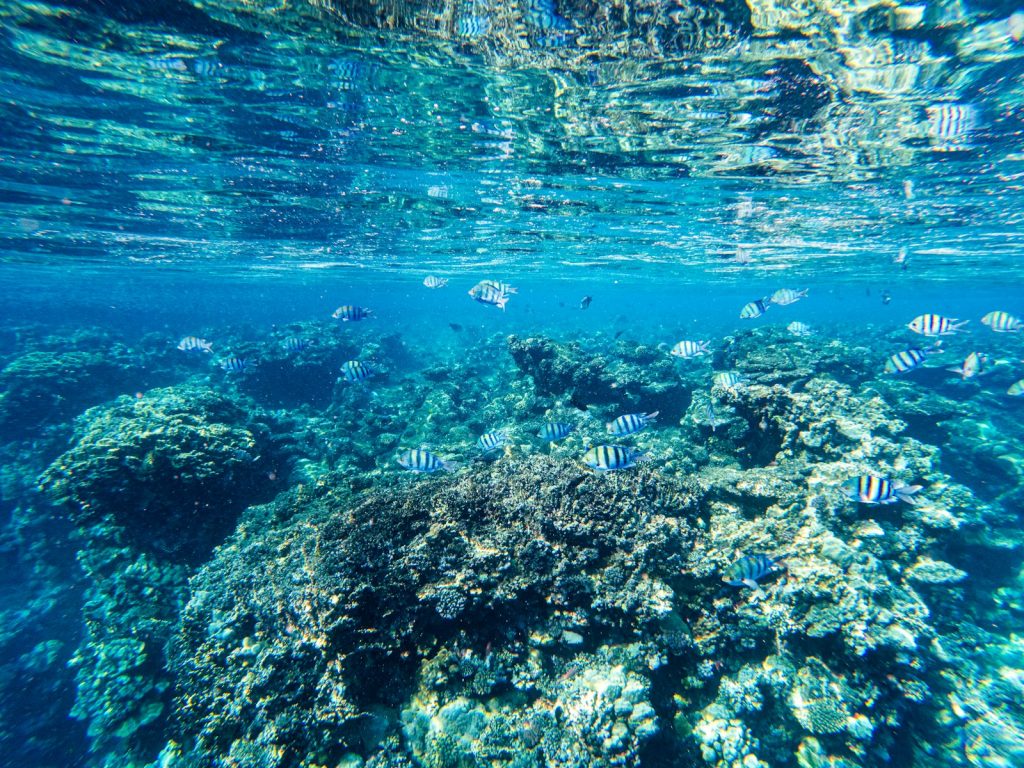
Komodo is in the heart of the Coral Triangle, where Pacific and Indian Ocean currents meet. That mix drives nutrient-rich water through tight channels, creating both the incredible biodiversity photographers love and the strong currents that require honest planning and experience.
Instead of a general “see everything” tour, a photography-focused Komodo dive cruise is planned around:
- Light and tides (for visibility, current and sun angle).
- Time in-water with key subjects (mantas, reef scenes, macro critters) rather than ticking off site names.
- Camera handling, rinsing, charging and safe storage on board.
- Group size and diver experience so photographers are not rushed.
Our trips are operated by Komodo Luxury, an Indonesian liveaboard specialist founded in 2015 and based in Denpasar, Bali (licensed under KBLI 79120 and part of Juara Holding Group Limited). Komodo Luxury operates its own fleet of luxury phinisi yachts in Labuan Bajo, including Komodo Signature and Komodo Prestige, and has earned TripAdvisor Travelers’ Choice awards in 2025 and 2026 on the Komodo Luxury listing. From Labuan Bajo, we design Komodo National Park dive cruises by length and interest, then match you to the right departure and boat.
Is Komodo Good for Underwater Photography?
Yes, Komodo is one of Indonesia’s most productive regions for both macro and wide-angle photography, provided you understand that conditions are dynamic and many sites are advanced.
Wide-Angle Highlights
- Manta encounters – Manta rays can be seen in several parts of the park, particularly at feeding and cleaning stations. Sightings are seasonal and never guaranteed, but a longer komodo photography dive trip increases your odds.
- Reefscapes and seamounts – Sites in the north and central areas feature hard coral ridges, bommies and seamounts with dense fish life and occasional pelagics. Some of these, such as well-known pinnacles and channels, are high-current sites suited to experienced photographers.
- Colorful soft corals – In the south and some central areas, cooler, nutrient-rich water supports soft corals and schooling fish that photograph beautifully under ambient light and strobes.
Macro and Critter Photography
A dedicated macro photography Komodo cruise can include time at southern and central sites known for:
- Nudibranchs, shrimps and crabs on rubble slopes and coral heads.
- Pygmy seahorses on seafans at appropriate depths for experienced divers.
- Sand and rubble areas at night for octopus, cuttlefish and other critters.
On many itineraries we’ll include at least one or two dives in the southern region (conditions allowing) to target macro habitats, then balance the rest of the trip with wide-angle sites.
Honest Limits and Safety
Komodo’s beauty is tied directly to its currents. That means:
- Some of the park’s most famous sites in the north have strong, multi-directional currents and are best for advanced divers who are comfortable managing cameras in challenging water.
- We adapt dive plans daily based on tides, wind and your comfort level. No photograph is worth a safety compromise.
- We recommend at least Advanced Open Water (or equivalent) and recent experience with current diving if you plan to bring a large camera rig and target the more exposed sites.
Our Phinisi Liveaboards for Photographers
All photography itineraries are run aboard Komodo Luxury’s own traditional wooden phinisi yachts, refitted as modern liveaboards.
Luxury Indonesian Phinisi Style
Expect:
- En-suite, air-conditioned cabins – twin and double configurations.
- Indoor lounges and outdoor shaded decks for reviewing images or flying a (permitted) drone above permitted areas on land.
- Chef-prepared Indonesian and international meals between dives.
Exact cabin layouts, maximum guest numbers and amenities differ between Komodo Signature and Komodo Prestige. We’ll match your komodo dive cruise for photographers to the vessel that fits your dates, group size and desired level of privacy.
Camera-Friendly Dive Deck and Facilities
On board, photographers typically have access to:
- Dedicated rinse tanks for cameras only.
- Table space for preparing housings and changing lenses.
- Multiple power outlets in common areas and cabins for charging batteries (bring your own adapters/extension as needed).
- Shaded areas near the dive deck so housings are not left heating in direct sun.
If you have special requirements such as 220V vs 110V needs, multiple strobes, or a separate topside kit, mention this during planning so we can advise on a suitable boat, cabin and storage options.
Trip Lengths: How Many Days for a Photography-Focused Cruise?
We design Labuan Bajo departures from short 3D/2N trips up to 8–10 nights and longer charter programs. For underwater photography, extra time usually means more chances to align good tides, light and wildlife.
| Trip length (ex-Labuan Bajo) | Ideal for | Photography focus | Indicative dive count* |
|---|---|---|---|
| 3D/2N | First visit, limited time | Taste of mantas + 1–2 macro/wide sites | Up to ~6 dives |
| 4D/3N | Balanced short break | Core central-north highlights; good for wide-angle | Up to ~9 dives |
| 5D/4N – 6D/5N | Serious photography trip | Mix of wide-angle + dedicated macro sessions | ~12–16 dives |
| 7D/6N – 10D/9N | Comprehensive itinerary or private charter | North, central and (conditions allowing) southern macro | 18+ dives |
*Dive counts are indicative and depend on conditions, park regulations and your preference for land excursions.
Short Photography-Focused Cruises (3–4 Days)
Shorter trips depart from Labuan Bajo and focus on the central and northern sectors of Komodo National Park. For photographers, 3–4 days allows us to:
- Target one manta-focused day (season and conditions permitting).
- Schedule 1–2 macro-friendly dives on sheltered slopes or reefs.
- Include at least one classic reef or seamount for wide-angle.
We advise short itineraries mainly for returning photographers who know they want to focus on a few specific subjects, or travelers combining a Komodo cruise with other Indonesian destinations.
Ideal Photography Trips (5–6 Days)
For most underwater photographers, a 5–6 day komodo photography dive trip strikes the best balance of variety, conditions and cost. On a typical 5–6 day plan we can:
- Spend multiple dives at manta sites to work different angles and conditions.
- Schedule day and night macro dives on different substrates.
- Include several bluewater or seamount dives where pelagics may pass.
- Build in some “repeat choice” dives where you revisit a favorite site.
Extended Charters (7+ Days)
Extended itineraries are often requested by photography clubs, small groups, or mixed-interest charter groups who wish to combine diving, topside landscapes and Komodo dragons. With 7–10 days we can:
- Structure the route to visit both northern and southern sectors, conditions and park regulations permitting.
- Plan more flexible schedules with space for late starts after night dives.
- Add optional workshops or informal review sessions onboard, led by experienced guides or visiting pro photographers on selected departures.
To discuss the optimal trip length for your goals, reach out to us by WhatsApp at +62 811-3823-875 or email [email protected], or plan your trip with a short form and we’ll respond with tailored options.
Itineraries by Experience Level
Komodo National Park has a wide variety of sites, from sheltered bays suitable for newer divers to high-energy pinnacles best suited to advanced and very experienced photographers.
For Intermediate Photographers (Advanced Open Water, limited current experience)
If you have your Advanced certification and are comfortable with your camera in mild current but haven’t yet logged many strong-current dives, we will likely focus your dives on:
- Sheltered reef slopes in the central area.
- Selected manta cleaning or feeding areas during milder tides.
- Macro-friendly rubble slopes and sandy bottoms, often in bays.
Our guides will brief you on camera management in current (streamlined rig, strobe cable placement, careful finning) and may suggest leaving extra accessories on board for particularly dynamic dives.
For Advanced and Expert Photographers
If you have significant experience in strong current, are comfortable deploying an SMB and maintaining buoyancy with a sizable rig, we can include:
- More challenging seamounts and channels in the north where fish schools and potential pelagics are common.
- Deeper reef zones within recreational limits, conditions permitting, for fans, soft corals and schooling fish.
- Optional night dives focusing on critters and behavioral shots.
We may also group advanced photographers together on certain dives so the pace and positioning can better match photographic needs.
Dive Certifications and Requirements
- Minimum recommended certification
- Advanced Open Water (or equivalent) for a photography-focused itinerary.
- Recent experience
- At least 20–30 logged dives, including some in currents, helps you enjoy Komodo more fully with a camera.
- For strong-current sites
- We may ask for 50+ dives, recent current experience, and a check dive before including you on the most advanced dives.
Open Water divers and those with limited experience can still enjoy a komodo dive cruise for photographers, but we’ll select more sheltered sites and may suggest a macro-heavy approach with simpler conditions.
By-Interest Photography Themes: Macro, Mantas, Reefs
Most underwater photographers arrive with a priority subject list. We build the cruise around that, always keeping currents, visibility and your certification in mind.
Manta and Pelagic-Focused Trips
For guests whose main goal is wide-angle manta and pelagic shots, we typically:
- Schedule multiple manta-focused dives over at least two days, at varying times to work both cleaning and feeding behavior if present.
- Choose sites where you can hold a good position without damaging coral, using natural formations as support instead of hooks where possible.
- Emphasize respectful distance and park regulations; flashes and video lights must be used responsibly to avoid disturbing animals.
Seasonality matters: certain months historically see more frequent manta activity at some sites, but sightings remain dependent on wild behavior and cannot be guaranteed.
Macro-Focused Komodo Cruises
On a macro photography Komodo cruise, we aim for:
- Repetitive dives on high-yield sites where critters can be re-found.
- Longer, shallower profiles where gas and NDL allow ample time for composition.
- Night dives over sand or rubble to search for octopus, crustaceans and other nocturnal subjects.
We encourage macro photographers to bring:
- 50–60mm macro (APS-C: 30–35mm equivalent) for easier critter acquisition in Komodo’s sometimes-moving water.
- Focus light with a narrow beam.
- A compact snoot if you enjoy black-background macro or creative lighting.
Balanced “Portfolio” Itineraries
Most komodo dive cruise photographers choose a mixed portfolio approach. A typical 5–6 day balanced itinerary might include:
- 2–4 manta-focused dives.
- 4–6 reef and seamount dives for schools, reefscapes and behavior.
- 3–5 macro-focused dives, including at least one night dive.
- One or more land excursions to shoot Padar Island landscapes, Pink Beach colors or Komodo dragons under natural light.
Beyond the Lens: Land Excursions and Non-Dive Highlights
Photography on a Komodo cruise isn’t limited to the underwater world. Labuan Bajo-based itineraries commonly include:
Komodo Dragons
Komodo National Park, established in 1980 and declared a UNESCO World Heritage Site in 1991, is globally known for Komodo dragons. We can schedule a guided walk on Komodo or Rinca Island with park rangers, where you can photograph the dragons and landscapes from a respectful distance. Exact routes and access depend on current park regulations.
Padar Island Sunrise or Sunset
Padar’s viewpoint is one of the region’s most photographed locations, with multiple bays visible from the ridge. The hike is short but steep, and in warm weather carrying heavy camera gear requires a bit of planning for water and timing.
Pink Beach and Other Shorelines
Some itineraries include time at beaches known for soft sand and colorful water where you can work on split-shots, drone shots (where permitted) and natural-light snorkel images.
During planning, let us know if topside photography is a priority so we can adjust dive counts and timing.
Seasonality, Conditions and Wildlife
Komodo can be dived year-round, but the character of your images will change with the season. Conditions and wildlife behavior are variable and not guaranteed, but there are general patterns:
- Dryer months (approx. April–November) – Typically better visibility in northern and some central sites; popular for wide-angle reef and mantas.
- Transitional periods – Can bring productive water movement and interesting conditions for both macro and wide-angle, though surface weather may be more changeable.
- Cooler southern waters – At certain times of year, the southern region is cooler and rich in nutrients, supporting soft corals and prolific macro life.
Wind, swell, and national park regulations may alter any planned route; our captains and cruise directors adapt itineraries daily to keep diving safe and rewarding.
Park Fees, Permits and Practicalities
Komodo National Park requires a mix of entry fees, diving permits and local taxes for each visitor. These typically vary by:
- Nationality (Indonesian vs international visitor).
- Weekday vs Sunday/public holiday.
- Activities (diving, trekking, camera permits where applicable).
Important: Park fees and structures change periodically. We provide current estimates in your quote, but you should always verify the latest rates close to your departure date. As of our last verification (June 2026), most guests can expect a per-day park fee package in addition to the cruise fare.
Pricing: What Does a Komodo Photography Dive Trip Cost?
Our komodo underwater photography cruise itineraries are customized by boat, cabin category, season, trip length and whether you book a scheduled departure or a full-boat private charter.
- Scheduled cabins – Typically the most efficient option for solo photographers or small groups joining others. As a broad indication (last verified June 2026), multi-day dive cruises in Komodo aboard luxury phinisi yachts often fall roughly in the US$300–600 per person per night range, depending on specifics.
- Private charters – Full-boat rates provide maximum control over itinerary and group composition—ideal for clubs, workshops or families. Indicative totals (last verified June 2026) for a luxury phinisi in Komodo often range from the equivalent of US$4,000–10,000+ per night, depending on yacht, capacity and season.
These ranges exclude Komodo National Park fees, equipment rental, optional courses and some onboard extras. For a detailed quote matched to your dates and camera needs, contact us directly by WhatsApp at +62 811-3823-875, email [email protected], or plan your trip via our enquiry form.
How We Design Your Photography-Focused Cruise
As Cruise Experience Designer at Labuan Bajo Dive Cruise, my role is to align your expectations with what Komodo can realistically offer on your dates.
1. Understand Your Priorities
We start with a few focused questions:
- Macro, mantas, reefscapes – what is your top priority?
- Certification level, logged dives and last time in current.
- Preferred trip length and available travel dates.
- Solo, couple, friends, club or family group?
- Camera system (DSLR/mirrorless/compact, video focus, strobes, etc.).
2. Match You to Boat and Departure
Using Komodo Luxury’s fleet—including Komodo Signature and Komodo Prestige—we identify:
- Existing departures with the right focus and group profile, or
- Available charter windows for private photography groups.
3. Shape an Indicative Itinerary
Together with our operations team, we outline a provisional plan:
- Priority regions within the park (north/central/south).
- Approximate balance of wide vs macro dives.
- Number and timing of land excursions.
The exact site sequence is always adapted on board, based on conditions, park guidance and the group’s performance.
4. Fine-Tune Logistics from Labuan Bajo
We help you connect the dots:
- Domestic flights to Labuan Bajo (LBJ) from Bali, Jakarta or other hubs.
- Pre- and post-cruise hotel nights, if needed, to buffer flight schedules.
- Transport between Labuan Bajo airport, hotel and the harbor.
Our sister platform liveaboardlabuanbajo.com focuses on the wider liveaboard offering from Labuan Bajo, if you’re comparing different styles of cruise before deciding.
Preparing Your Camera and Yourself for Komodo
Camera Setup Tips
- Two lenses minimum – One wide-angle (fisheye or rectilinear) for mantas and reefs, and one macro lens for critters.
- Backups – Extra o-rings, vacuum pump if your housing supports it, spare fiber optic/electrical cables and desiccant packs.
- Data management – Sufficient memory cards and at least one external drive; Komodo’s variety encourages heavy shooting.
Diving Skills
- Refresh your buoyancy before arrival; photographers with good trim get better images and protect the reef.
- Practice using your rig in current—ideally in your local waters or in a pool to streamline your position and strobe arms.
- Consider a check-out shore or day dive (in Bali or Labuan Bajo) before boarding if you’re using a new housing or camera.
Etiquette for Photographer Groups
- Take turns at key subjects; one or two minutes each yields more overall quality shots than a crowd piling on.
- Respect guides’ instructions on distance to animals, especially at manta and turtle cleaning stations.
- Orient strobes and video lights to minimize disturbance and backscatter.
Start Planning Your Komodo Underwater Photography Cruise
Every photographer’s ideal itinerary is different: some travel solo and share a cabin; others bring a non-diving partner who prefers more beach and dragon time; some arrive with a club and want a private charter with a structured workshop. From Labuan Bajo, we can shape all of those scenarios into a safe, realistic, and photography-first route across Komodo National Park.
To begin, share your dates, experience level and photography goals via WhatsApp at +62 811-3823-875, email [email protected], or plan your trip with a short message. We’ll respond with concrete options tailored to you, including indicative pricing, boat details and sample day-by-day plans.
Is Komodo good for underwater photography?
Yes. Komodo offers a rare mix of wide-angle opportunities (mantas, reefscapes, schooling fish) and exceptional macro life, all within a relatively compact area. The same currents that support this productivity mean some sites are advanced and conditions change quickly, so careful trip design and honest communication about experience level are essential.
Is Komodo better for wide-angle or macro?
Komodo is strong in both. Northern and some central sites are often favored for wide-angle—mantas, seamounts and coral ridges—while certain central and southern sites, when conditions allow, are excellent for macro critters and night dives. Most photographers choose a mixed itinerary covering both rather than one or the other exclusively.
What camera facilities are available on board?
Our Komodo Luxury phinisi liveaboards typically provide dedicated camera rinse tanks, workspaces for assembling housings and multiple charging points in common areas and cabins. Storage and exact configurations vary by vessel, so let us know your system details in advance so we can match you to the most suitable boat and advise on any extra power strips or adapters to bring.
How long should a Komodo photography dive trip be?
For serious underwater photography, we recommend at least 5–6 days ex-Labuan Bajo to allow repeat dives on key sites, flexibility around tides and a mix of wide-angle and macro sessions. Shorter 3–4 day trips work best for those with tight schedules or very specific targets; longer 7–10 day itineraries are ideal for private charters and comprehensive portfolios across north, central and (conditions permitting) southern Komodo.
Do I need to be an advanced diver to join a Komodo photography cruise?
We strongly recommend Advanced Open Water (or equivalent) and recent experience in currents for a photographer-focused cruise, especially if you plan to carry a larger rig or visit the more exposed northern sites. Less experienced divers can still enjoy shelterd sites and macro-focused dives, but some advanced sites may not be appropriate until skills and comfort improve. Safety always comes before getting the shot.