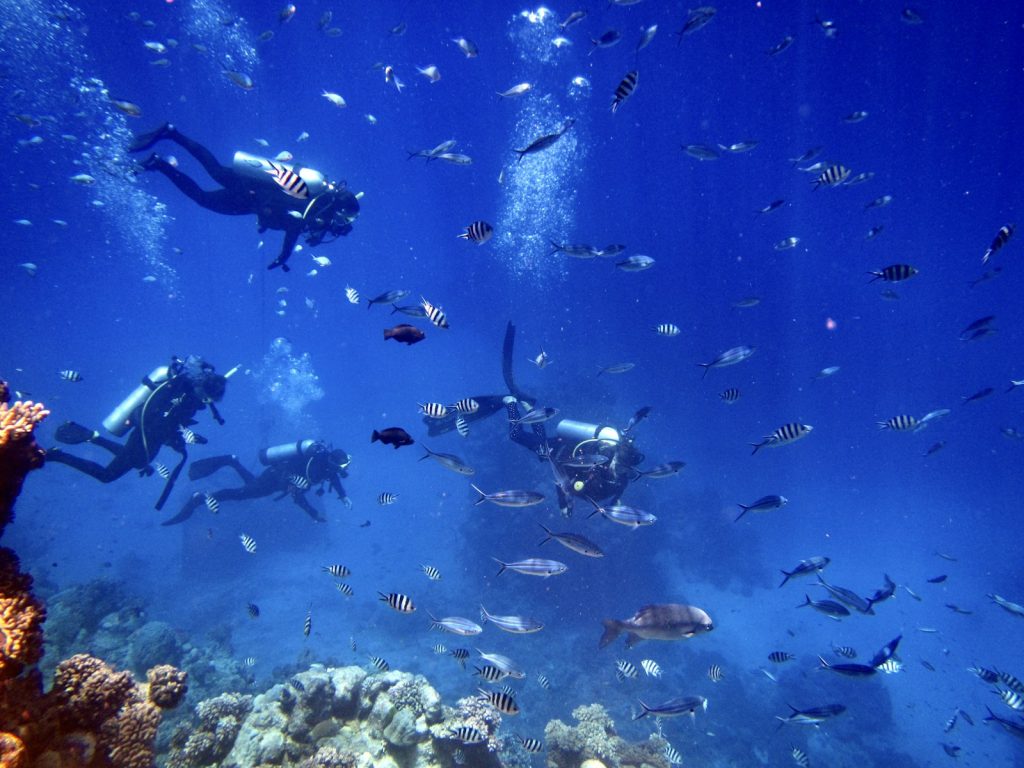
Good to know: Labuan Bajo Dive Cruise is operated by Komodo Luxury, a real award-winning Indonesian liveaboard operator (TripAdvisor Travelers’ Choice 2022–2025, founded 2015, part of Juara Holding Group Limited). Komodo National Park (UNESCO 1991) requires park entry fees/permits — general information, verify current rates. Dive-site conditions and seasons are indicative and vary; Komodo currents are strong and many north sites are advanced. Marine life — mantas, hammerheads — is seasonal and wild, and can never be guaranteed. Prices are indicative ranges, by quote, and vary by vessel, cabin, season and trip length. Enquiries and booking via WhatsApp +62 811-3823-875 and [email protected].
A manta dive cruise Komodo is a liveaboard trip designed to maximise your time at Komodo’s manta ray hotspots, especially Manta Alley in the south and Manta Point/Mawan in the centre of the park. On this page I’ll explain how we build these manta-focused itineraries by season, experience level and trip length aboard Komodo Luxury’s own phinisi liveaboards.
What Is a Manta Dive Cruise in Komodo?
A manta-focused Komodo cruise is still a full Komodo dive trip – you will dive reefs, pinnacles and drifts – but the route and timing are planned so you have the best realistic chance to meet manta rays underwater.
From my seat on the dive deck, this means three things:
- Scheduling the right manta sites (Manta Alley, Manta Point/Mawan) in the right season.
- Choosing dive profiles and tides for current that mantas like, but you can handle safely.
- Balancing “manta hunting” with other Komodo highlights so you don’t spend days chasing ghosts.
All Labuan Bajo Dive Cruise trips are operated by Komodo Luxury – an Indonesian liveaboard operator founded in 2015, part of Juara Holding Group Limited, licensed under KBLI 79120 and based in Denpasar, Bali. Komodo Luxury runs its own fleet of luxury phinisi liveaboards, including Komodo Signature and Komodo Prestige, and has received TripAdvisor Travelers’ Choice awards in 2025 and 2026 on the Komodo Luxury listing for guest reviews.
We start and end your manta cruise in Labuan Bajo, the gateway to Komodo National Park.
Key Manta Sites: Manta Alley & Mawan (Manta Point)
Manta Alley – Southern Komodo Cleaning Station
Manta Alley is the classic south Komodo manta site: a series of rocky channels and bommies that act as a cleaning station in cooler, nutrient-rich water.
- Location & setting: Remote corner of southern Komodo, exposed to swell and strong currents.
- Typical conditions: Cooler water, reduced visibility compared to the north, often surge and current.
- Why mantas love it: Plankton and cleaning stations bring mantas in for repeated passes and tight circling.
- Why we respect it: Entry, exit and depth control in channel current are not for casual holiday divers.
We usually treat Manta Alley as an advanced site. On a dedicated manta cruise, I will only schedule it for guests who:
- Have solid buoyancy and gas management.
- Are comfortable backrolling into current and descending quickly as a group.
- Can maintain position on a slope or behind a rock without grabbing coral.
You are not racing mantas. We pick a stable vantage point and let them come to us. If current spikes or surge becomes too messy, we abort or change the plan. Mantas are not worth losing a diver.
Mawan / “Manta Point” – Central Komodo Feeding & Cleaning
Mawan (often loosely referred to as Manta Point) lies in the central part of Komodo National Park. It is far more accessible than Manta Alley and usually works for a wider range of divers.
- Location & setting: Sandy slope and coral patches near a small island, moderate current.
- Typical conditions: Warmer than the south, variable visibility, currents from mild to strong depending on tide.
- Why mantas love it: A mix of feeding and cleaning; mantas cruise along the reef edge and over the sand.
- Why divers like it: Often possible to combine manta time with gentle drifting and macro on the reef.
On many manta cruises we aim to dive Mawan twice if conditions and manta activity cooperate – one longer, stationary “manta watch” dive and one dive drifting a wider section of the reef.
Snorkelling is also possible here (more on that below), which is why Mawan is the default manta site for mixed-experience groups and families.
Manta Season in Komodo: When to Target Which Site
Komodo is part of the Coral Triangle and its manta rays are present all year, but their numbers and where you find them change by season. Any operator promising mantas “guaranteed” is selling fantasy. Here is how I actually plan:
- December – March (wet season, south focus)
- Often the strongest manta action at Manta Alley and other southern sites when conditions allow. Cooler water, more plankton, generally better manta density in the south but increased swell and wind risk.
- April – June (shoulder season)
- Transitional; good manta possibilities both in the south and central sites like Mawan. Flexibility in routing is key – we follow weather, swell and current predictions.
- July – September (dry season, central/north focus)
- The sea is usually calmer in the north and centre, park visibility often peaks. Mantas are still seen frequently around Mawan/Manta Point and occasionally at other central spots, but southern routes are more exposed to wind and swell.
- October – November (second shoulder)
- Another very productive period for mantas in central Komodo; some years also good chances in the south before the wet season builds.
These are indicative patterns only. Ocean conditions and plankton blooms don’t follow calendars. On some trips we get daily manta encounters outside the “perfect” month; on others, the ocean is quiet even in peak season.
We design a Komodo manta season cruise around your dates and risk tolerance. If you are set on Manta Alley specifically, you accept higher chances of weather-related plan changes. If you prefer more reliable conditions, we focus on central manta sites and stronger backup options.
Diving vs Snorkelling with Mantas in Komodo
You can see mantas from both above and below, but the experience – and the safety considerations – are different.
Diving with Mantas
- Pros:
- Longer bottom time at cleaning stations and along manta flight paths.
- Stable viewing position with less surface chop.
- Chance to combine mantas with reef, macro and fish life in a single dive.
- Cons:
- Requires certification and good buoyancy, especially at sites with current.
- More complex logistics (briefings, gas management, entry/exit timing with current).
For serious manta enthusiasts, a manta ray diving cruise Komodo-style itinerary makes sense: 3–4 dives per day, repeated mantas when possible, and night dives on nearby reefs.
Snorkelling with Mantas
At places like Mawan, snorkellers can also have excellent manta interactions when conditions are right.
- Pros:
- Accessible to non-divers and younger family members who can swim confidently.
- No certification needed; fast entry and exit from the tender directly above manta routes.
- Cons:
- More exposed to waves, surface current and boat traffic.
- Viewing angle is less intimate than being stationary at 10–15 m on scuba.
On a mixed group cruise, we often run parallel snorkel and dive sessions at manta sites. Divers head slightly deeper to hold position; snorkellers stay closer to the tender under a dedicated snorkel guide.
Code of Conduct Around Mantas
On every manta cruise I repeat the same rules, because they matter:
- No chasing, touching or blocking a manta’s path.
- Stay low to the reef or sand, keep your bubbles and fins away from cleaning stations.
- Photographers: get your shot without bulldozing the rest of the group.
Mantas decide how close they come. The less we act like predators, the closer and longer they stay.
Trip Lengths: How Many Days for a Komodo Manta Cruise?
The right itinerary depends on your time, budget and experience. Here is how manta-focused trips usually break down.
| Trip length | Typical route focus | Manta opportunities | Recommended experience |
|---|---|---|---|
| 3 days / 2 nights | Central Komodo (Mawan, surrounding reefs) | 1–2 manta sessions at Mawan if conditions allow; focus on nearby highlights. | Open Water with recent dives; suitable for mixed diver/snorkeller groups. |
| 4–5 days / 3–4 nights | Central + selective north or south (season-dependent) | Multiple Mawan dives; possible attempt at Manta Alley in right season and weather. | Open Water with 20+ logged dives; comfortable in moderate current. |
| 6–8+ days | Comprehensive north–central–south routing | Best odds for both Manta Alley and repeated central manta dives across different tides. | Advanced Open Water or equivalent; good current, drift and negative entry skills. |
Longer trips allow me to play the tide table and revisit manta sites at different states of the tide and different times of day. That can be the difference between one brief fly-by and multiple long passes.
To discuss what’s realistic for your dates and experience, contact our team via plan your trip or WhatsApp at +62 811-3823-875. They build the schedule; I tell them honestly which sites fit your level.
Experience Levels, Certification & Currents
Komodo is not a “first-dive-after-Open-Water” destination. The same nutrient-rich currents that feed mantas also make many sites advanced, especially in the north and on exposed pinnacles.
Minimum Recommended Levels
These are my general guidelines for manta-focused diving:
- Mawan / central manta dives:
- Open Water certified minimum.
- 10–20 recent dives, comfortable descending and ascending in mild to moderate current.
- Manta Alley (south):
- Advanced Open Water (or equivalent) strongly recommended.
- Solid control in current, negative entries, and group cohesion.
- North pinnacles (e.g. Castle Rock, Batu Bolong etc.) – often paired on longer manta trips:
- Advanced certification with drift experience.
- Comfortable dealing with down/up currents and blue-water safety stops.
We will not take you to sites that exceed your skills, no matter what you saw on social media. There are always alternative reefs with gentler conditions and very good diving.
Dive Site Conditions: Indicative, Not Fixed
Depths, currents and visibility in Komodo are dynamic:
- Depth: Exact working depths change with tide and where we choose to position the group.
- Current: Can switch direction and strength within the same dive; eddies and down-currents exist at many headlands and pinnacles.
- Visibility: Varies from greenish plankton soup on a manta feast day to wide-open blue on others.
Any fixed depth or current rating you see online (including here) is a guideline only. Onboard, I brief you on what we actually find that day, not on what a diagram said.
How We Build a Komodo Manta Cruise Itinerary
Every Komodo manta cruise from Labuan Bajo is customised by:
- Trip length (3 days to a week or more).
- Experience level and certifications in the group.
- Season, tides and current predictions.
- Private charter vs shared departure; family vs hardcore divers.
Core Building Blocks
On a manta-focused route, we usually mix:
- Manta sessions at Mawan and, if realistic, Manta Alley.
- Reef and drift dives in central Komodo for healthy corals, turtles and schools of reef fish.
- Optional advanced pinnacles in the north (currents can be strong and these are not suitable for everyone).
- Night dives on sheltered reefs for macro and nocturnal life.
The manta sites are the “anchors” in the schedule; the rest of the dives are chosen to balance difficulty and variety.
Day-by-Day Flow (Example Pattern)
This is an example pattern for a 4–5 day komodo manta cruise – not a fixed template:
- Day 1: Check‑dive on an easy reef near Labuan Bajo, second dive in central Komodo, sunset or night dive depending on group.
- Day 2: First manta attempt at Mawan; second dive on a neighbouring reef; optional third dive (macro or light drift).
- Day 3: Tide-dependent second visit to Mawan or adapt to another manta-capable site; afternoon drift on coral garden.
- Day 4–5: Depending on season and weather – move south for Manta Alley, or north for pinnacles; final relaxed reef dives before returning to Labuan Bajo.
On a longer trip we spread the advanced current sites out, so no one is exhausted or overloaded with stressful dives in a row.
Marine Life Beyond Mantas
A manta cruise is not just manta, manta, manta. Komodo National Park, established in 1980 and recognised as a UNESCO World Heritage Site in 1991, sits in one of the richest marine regions on earth.
On a typical manta-focused itinerary you can also see:
- Reef life: Hard and soft corals, sponges, sea fans, and dense clouds of anthias and fusiliers.
- Reef sharks: Whitetip and blacktip reef sharks on many dives.
- Turtles: Green and hawksbill turtles resting and feeding on most healthy reefs.
- Macro: Nudibranchs, shrimps, crabs, and occasional frogfish and seahorses on suitable sites.
- Pelagics: Trevallies, tunas and occasional large rays or other surprises in the blue.
Hammerheads and other big pelagics have seasonal patterns and specific sites, often requiring dawn or deep dives with advanced conditions. If that is your primary interest, tell the team – but they remain wild animals and we never promise them.
Our Boats: Komodo Signature & Komodo Prestige
Your manta dive cruise runs on one of Komodo Luxury’s owned phinisi liveaboards:
- Komodo Signature – luxury phinisi with spacious cabins and modern facilities.
- Komodo Prestige – similar high-end phinisi comfort and dive-friendly layout.
Both are traditional-style wooden phinisi adapted for serious divers: gear-friendly dive decks, compressors, tenders and safety equipment appropriate for multi-day liveaboard operations in Komodo.
Trips are available as:
- Shared departures: Join other divers on a scheduled route, by cabin.
- Private charters: Full-boat, fully customised routes by experience and interest.
For a deeper liveaboard perspective, you can also explore our sister site liveaboardlabuanbajo.com, which focuses on the broader liveaboard offering out of Labuan Bajo.
Park Fees, Pricing & What’s Included
Komodo National Park Fees
Komodo National Park charges entry and activity fees for all visitors. These cover park access, diving, snorkelling and ranger-managed areas.
- Fees vary by nationality, day of the week, activities and exact regulations at the time.
- Rules and amounts change from time to time; any figure you see online can go out of date quickly.
Use any fee information as general guidance only and confirm the current structure with our reservations team before your trip.
Trip Prices
Pricing for a manta dive cruise with Komodo Luxury depends on:
- The vessel (Komodo Signature vs Komodo Prestige).
- Cabin category and occupancy.
- Season (high vs low), trip length and route complexity.
- Shared trip vs full private charter.
As an indicative range (last verified June 2026):
- Per-person prices on shared trips typically fall within a premium liveaboard bracket for Indonesia.
- Private charters are quoted case‑by‑case depending on the above factors and your requested dates.
Your quote normally includes:
- Cabin accommodation and meals on board.
- Drinking water, tea and coffee.
- Diving (number of dives per day depending on schedule and safety).
- Standard dive guiding.
It usually excludes:
- Komodo National Park fees and permits.
- Rental dive gear and specialty equipment (tanks with special gas mixes, etc., if requested).
- Alcoholic drinks and certain soft drinks.
- Crew tips, flights and hotels before/after the cruise.
To get an accurate quote for your dates and group, reach out via plan your trip or WhatsApp +62 811-3823-875 and our sales team will respond with vessel and cabin options.
Why Base Your Komodo Manta Cruise from Labuan Bajo?
All our trips depart from and return to Labuan Bajo, Flores. This has clear advantages for a manta-focused trip:
- Shorter transit times to central manta sites compared to other ports.
- Ability to adjust early if weather or park regulations change, because we are locally based.
- Easy connections with domestic flights and local hotels for pre‑ and post‑cruise nights.
Operating from Labuan Bajo also means our team is on the ground year‑round. We see changes in conditions and park procedures in real time, not just from reports.
Planning Your Manta Dive Cruise in Komodo
If mantas are high on your wish‑list, my main advice is:
- Be honest about your level. It’s better to enjoy safe central manta dives than be stressed at Manta Alley.
- Allow enough days. More days = more shots at the right tide and more backup dives if mantas are shy.
- Give us your priorities up front. Mantas only? Mantas plus macro? Family with snorkellers? We can tailor the sites.
From there, our reservations team and I will connect the dots: right boat, right season window, and a realistic manta‑focused route that respects your skills and the ocean.
To start planning, contact us via plan your trip or message WhatsApp +62 811-3823-875 with your preferred dates, number of guests, dive certifications and any special requests.
FAQs: Komodo Manta Cruises
What is the best manta site in Komodo?
For experienced divers, Manta Alley in south Komodo is often the most impressive dedicated manta cleaning station, but it is also more advanced and condition‑dependent. For a wider range of divers and snorkellers, Mawan (often called Manta Point) in central Komodo usually offers the best balance of manta potential, accessibility and backup dive options.
When is manta season in Komodo?
Mantas can be seen year‑round in Komodo, but patterns shift by area. The southern sites, including Manta Alley, often peak from roughly December to March when cooler, plankton‑rich water dominates. Central manta sites like Mawan have good chances across a broader part of the year, especially around the shoulder seasons. These patterns are indicative only; conditions and sightings vary trip to trip, and mantas are never guaranteed.
Is it better to dive or snorkel with mantas in Komodo?
If you are certified and comfortable in current, diving generally gives a more stable and immersive manta experience, especially at cleaning stations. Snorkelling can still provide excellent encounters at sites like Mawan for confident swimmers, and is ideal for non‑divers or younger family members. On many trips we organise both options at the same site with separate guides.
Are mantas guaranteed on a Komodo manta cruise?
No. Even on a dedicated manta dive cruise in Komodo, sightings are never guaranteed. We choose seasons, routes and dive times that maximise your chances, but mantas are wild animals and their movements depend on plankton, currents and other factors beyond anyone’s control. The rest of the diving in Komodo is strong enough that the trip is still worthwhile even if mantas are shy.
Can beginners join a Komodo manta dive cruise?
Qualified Open Water divers with some recent experience can join manta-focused cruises that emphasise central sites like Mawan and easy reefs. Strong currents and advanced northern or southern sites, including Manta Alley, may not be suitable for beginners. We assess each guest’s experience and may adjust dive choices or offer snorkelling options instead of more demanding dives for safety.