Good to know: Labuan Bajo Dive Cruise is operated by Komodo Luxury, a real award-winning Indonesian liveaboard operator (TripAdvisor Travelers’ Choice 2022–2025, founded 2015, part of Juara Holding Group Limited). Komodo National Park (UNESCO 1991) requires park entry fees/permits — general information, verify current rates. Dive-site conditions and seasons are indicative and vary; Komodo currents are strong and many north sites are advanced. Marine life — mantas, hammerheads — is seasonal and wild, and can never be guaranteed. Prices are indicative ranges, by quote, and vary by vessel, cabin, season and trip length. Enquiries and booking via WhatsApp +62 811-3823-875 and [email protected].
Komodo night diving means entering the water after dark to explore Komodo National Park’s reefs, slopes and muck sites under torch light, usually from a dedicated dive-cruise or liveaboard. On a komodo night diving cruise, you sleep on board a phinisi, do your day dives at classic Komodo sites, then add one or more night dives on selected walls, bays and sand flats that come alive after sunset.
Why Komodo Night Diving Is Different
Komodo is already known for strong currents, rich plankton and dense marine life. At night, that productivity switches gears:
• Day fish tuck into the reef.
• Crustaceans, molluscs and cephalopods come out to hunt.
• Predators like giant trevally and reef sharks use your torch beam to ambush prey.
That makes night dives here more intense than many places in Indonesia. You are closer to the reef, the field of view is small, and you need better control in current and surge than on a casual resort night dive.
On a night diving liveaboard in Komodo, the advantage is timing and positioning. We can move the boat to more sheltered leeward bays or sloping reefs where current is manageable, choose tides carefully, and brief the dive as an advanced “torch skills and buoyancy” session — not an afterthought once the sun goes down.
Komodo Night Dive Sites: What You Actually See
No operator owns “secret” komodo night dive sites; we all work with the same National Park geography and conditions. The difference is choosing sites that match the group’s experience and the conditions on the day.
Below is an indicative comparison of the types of night sites we commonly use on Labuan Bajo Dive Cruise itineraries. Names are generic groupings rather than promising a specific site on a specific night — that always depends on weather, currents and park rules.
| Type of Komodo Night Dive Site | Typical Features | Suggested Level | Best Period (Indicative) | What You Might See |
|---|---|---|---|---|
| Protected muck / sand bay (e.g. around Labuan Bajo & central bays) | Gentle slope, sand & rubble, mooring or anchored boat | Open Water with good buoyancy | All year; clearest June–Oct | Stargazers, frogfish, seahorses, nudibranchs, crustaceans, octopus |
| Fringing reef slope (central Komodo area) | Reef at 3–5 m, sloping to deeper sand; mild current if timed well | Advanced Open Water or 30+ logged dives | Generally calmer Apr–Nov | Reef octopus, sleeping turtles, Spanish dancers, hunting lionfish |
| Channel edges & corners (selected parts of the central straits) | Edges of current-swept passages, often with surge or variable flow | Experienced; strong current skills | Only on optimal tide & conditions | Schooling fish, reef sharks, hunting trevally, squid |
| North Komodo reefs (typically day sites) | Famous for strong currents; usually not used for night dives | Advanced & very current-competent | Primarily day diving, Jun–Oct | Night option only if exceptionally calm and group is expert |
At night in Komodo you should expect:
- Cephalopods: Reef octopus, occasionally mimic or coconut octopus, and squid.
- Crustaceans: Boxer shrimps, cleaner shrimps, crabs, lobsters, decorator crabs.
- Macro critters: Nudibranchs, flatworms, cowries, seahorses and pipefish on muckier sites.
- Reef life: Parrotfish sleeping in mucus cocoons, morays hunting, lionfish working your torch beam.
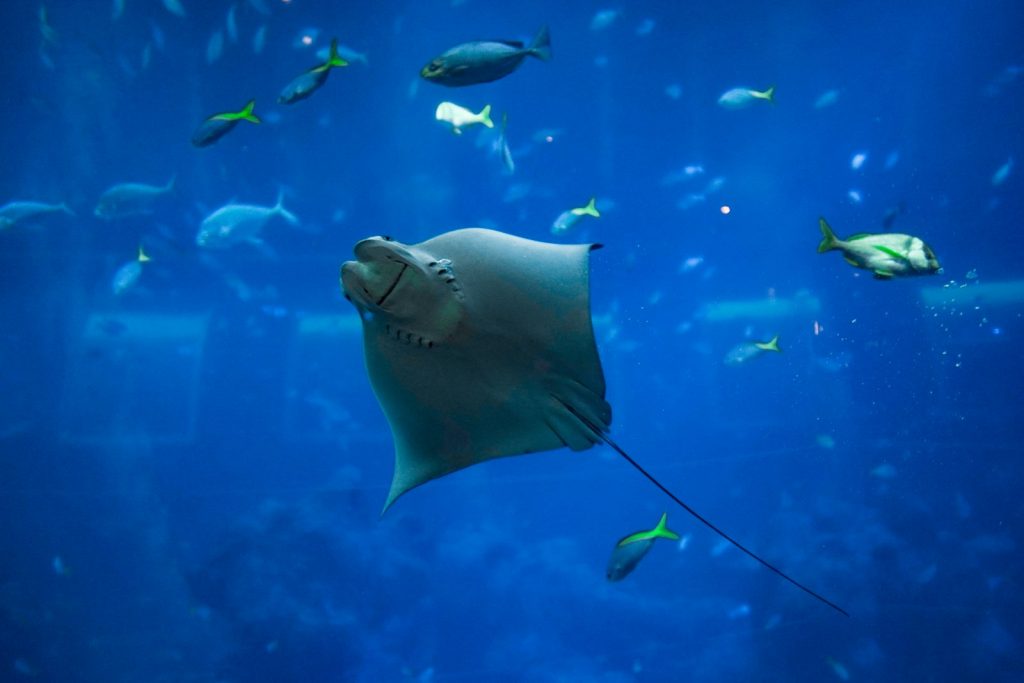
- Occasional larger life: Bamboosharks, reef sharks, rays and turtles. These are wild animals; no operator can guarantee them on any given dive.
Manta rays and hammerheads are not realistic targets for Komodo night dives. Mantas may be seen in the late afternoon at cleaning stations in season, but regular manta encounters in Komodo are primarily a daytime experience. Hammerheads are rare, seasonal and deep; they are definitely not a night-diving objective here.
Is Komodo Night Diving for You?
Komodo is not the place to attempt your very first night dive. Conditions are more complex than in many resort areas, and current techniques matter.
Recommended Experience & Certification
As a rule for our Labuan Bajo Dive Cruise itineraries:
- Minimum certification:
- Open Water with recent dives, or
- Advanced Open Water preferred, especially for central strait dives.
- Minimum experience:
- Ideally 10–20 logged dives, including at least one prior night dive.
- For stronger current sites or channels, we look for 30–50+ dives and good current control.
If this is your first-ever night dive, we strongly recommend:
- Starting in a calm muck/sand bay with a simple navigation pattern.
- Doing a buoyancy refresher on your first day dives of the cruise.
- Staying shallower and closer to the guide than you think you need to.
We will refuse or modify a night dive if conditions spike or if a diver clearly struggles in the day. Safety and control come before ticking a “night dive in Komodo” box.
Conditions You Can Expect at Night
Conditions are variable; no operator can promise flat seas and gentle drifts, but you should be ready for:
- Currents: Generally weaker at night sites than at places like Castle Rock or Shotgun, but still present. Tidal planning and entry timing matter.
- Visibility: Often 10–25 m on clear-season nights; it can drop with plankton, rain or wind. Night diving compresses your world to your torch beam anyway.
- Temperature: Typically around the mid-20s °C in the main season, cooler thermoclines possible, especially in the south and central straits.
- Surface conditions: Some nights are glassy; others have wind chop. Briefings cover entries, exits and surface-light protocols.
Komodo National Park was established in 1980 and became a UNESCO World Heritage Site in 1991. Its dynamic water movement is exactly why the ecosystem is so rich — and why we treat night currents with respect.
Night Diving from a Komodo Luxury Phinisi
Labuan Bajo Dive Cruise is operated by Komodo Luxury, part of Juara Holding Group Limited, specialising in dive-cruises in Komodo National Park. Our cruises run on our own luxury phinisi fleet: Komodo Signature and Komodo Prestige.
These are traditional Indonesian wooden schooners, refitted as modern dive liveaboards with:
- Comfortable ensuite cabins (twin/double configurations).
- Large dive decks designed for safe kit-up and post-dive rinsing.
- Separate camera rinse areas on dive-focused itineraries.
- Generators and charging points for torches, computers and cameras.
- Shaded lounge and dining areas, plus open decks for night-sky viewing between dives.
Komodo Luxury has been operating since 2015 and has earned Tripadvisor Travelers’ Choice recognition in 2025 and 2026. Awards do not make currents weaker or mantas more predictable, but they do indicate consistent service and safety standards.
On a typical Labuan Bajo Dive Cruise itinerary, night dives are incorporated as part of a balanced schedule:
- 2–3 day dives (depending on the program and conditions).
- 0–1 night dives on selected evenings.
- Total dives scaled to trip length and guest comfort, not an arbitrary maximum number on paper.
To talk through which of our departures include a strong night-diving component, you can plan your trip with our team or message us on WhatsApp at +62 811-3823-875.
Trip Lengths & How Many Night Dives You Can Realistically Do
The number of komodo night dive sites you can experience on one cruise depends on trip length, logistics and how your group feels. We are not interested in exhausting you for the sake of a schedule.
- 2D/1N “Taste of Komodo” cruise
- Usually 2–3 total dives. At most 1 night dive, and only if arrival/departure logistics and conditions align.
- 3D/2N short dive-cruise
- Roughly 6–7 dives. Commonly 1 guided night dive in a protected bay or central fringing reef, assuming conditions are suitable.
- 4D/3N classic Komodo dive-cruise
- Around 9–11 dives. Potential for 1–2 night dives, usually one muck/sand style and one reef slope, depending on currents and guest interest.
- 5D/4N to 6D/5N extended cruise
- Often 13–16+ dives. You might get 2–3 night dives if everyone is keen and rested, balanced against big-name day sites.
- 7D/6N or longer “full-Komodo” expeditions
- 16–20+ dives. Flexible for multiple night dives in different zones, including more advanced areas when safe and appropriate for the group.
All numbers above are indicative. Final schedules adjust to:
- Park authority rules and closures.
- Weather and sea state.
- Group experience and fatigue.
- Safety calls by the cruise director and dive guides.
Best Seasons for Night Diving in Komodo
You can run night diving liveaboard Komodo cruises all year, but conditions and marine highlights shift by season. Komodo’s microclimates are complex, and every year is slightly different, so treat the timing below as indicative rather than guaranteed.
June–October: Clearer Water & Busier Season
- Conditions: Typically drier, often better surface conditions, cooler water in some areas. Visibility often at its best.
- Night dives: Excellent time for reef-slope and fringing-reef night dives. Plankton can be lower than in the shoulder seasons but still present.
- Crowds: This is high season in Komodo, so we plan timing and choice of sites carefully to avoid busy moorings at night.
November–March: Wetter, Greener, More Plankton
- Conditions: Rainy season phases, with more cloud, wind variations and possible storms. Some operators pause or limit trips in parts of this period.
- Night dives: Generally more plankton and particles in the water, which means “sparkly” torch beams and active filter feeders. Visibility can be lower.
- Wildlife: Plankton can attract different critters, but surface conditions may restrict the choice of sites.
April–May & Late September–Early November: Transitional Windows
- Conditions: Often a good balance between the two extremes; can offer very pleasant night diving on both muck and reefs.
- Strategy: These months can be great for combining strong day diving in the north and central with comfortable night dives in protected areas.
Manta rays are more reliably encountered at certain central and southern sites during specific months (often influenced by plankton and currents), but their presence also varies year by year. Hammerheads are rare, largely a deep-water offshore phenomenon and not something we schedule night dives around.
Safety & Skills: How We Run Komodo Night Dives
Komodo’s currents deserve respect. Night dives here are guided, briefed and controlled. We do not treat them as casual “add-ons” to tick a box.
How a Typical Night Dive Is Managed
- Timing: Usually after an early dinner break. Briefing, kit-up, and then splash as a group.
- Site choice: Sheltered bays, muck/sand slopes or fringing reefs with manageable current and clear exit strategies.
- Ratios: Small groups with experienced dive guides. Exact numbers depend on certification and conditions, but we avoid crowding at night.
- Depth & profile: Conservative, typically shallow to moderate depths. No deep or decompression profiles at night on our standard trips.
- Lights: Each diver must carry a primary torch and a backup; we also use boat and line lights for surface orientation when appropriate.
Skills You Should Be Comfortable With
To enjoy a Komodo night dive safely, you should be able to:
- Maintain neutral buoyancy without constant finning or touching the bottom.
- Control your position relative to the guide and your buddy using minimal light signals.
- Execute a calm, controlled ascent and safety stop by torch light, including referencing your computer.
- Handle minor current and surge, including staying relaxed if the water pushes you slightly off line.
If any of these are weak, tell us early. We can choose easier sites, pair you with a more experienced buddy, or suggest skipping a particular night dive in favour of rest and a stronger next day.
Costs, Park Fees & How Pricing Works
Komodo National Park is a fee-paying protected area. There are daily park entrance fees and additional charges for activities like diving and trekking, which vary by day of the week and by nationality. Different boats and trip durations will spread those costs differently.
As of the last verification in June 2026:
- Park and diving fees: Expect that park fees and diving surcharges can form a noticeable portion of your overall cost. Details change periodically; we confirm the current structure on enquiry and include it clearly in your quote.
- Cruise prices: A multi-day dive-cruise on Komodo Signature or Komodo Prestige typically falls into a premium liveaboard price range relative to the region, reflecting private-boat operation, limited guest numbers and higher onboard service. We provide specific per-person or full-charter pricing by individual quote, based on trip length, season and cabin type.
Exact numbers are not listed here because authorities adjust park fees, and operational costs move with fuel, crew and maintenance. What does not change is our approach: transparent quotation, no surprise “mandatory extras” hidden from the initial discussion.
For an up-to-date quote including indicative park fees for your dates and group size, you can plan your trip or contact us directly on WhatsApp at +62 811-3823-875 or email [email protected].
How to Choose a Komodo Night Diving Liveaboard
If your priority is night diving — not just daytime highlights — ask these specific questions of any operator, including us:
1. How Many Night Dives Are Realistically Scheduled?
Avoid vague “up to X dives per day” claims. Ask:
- For your requested trip length, what is the typical number of night dives on that route?
- Are they optional add-ons, or integrated into the main program?
- What happens if the group is tired or conditions change?
On many Komodo Luxury cruises, we target one or two well-planned night dives on a 3–4 night trip, more on longer expeditions if the group is keen.
2. Which Areas Do You Use for Night Diving?
Push for concrete answers such as:
- “Protected bays/muck near X, Y zones”
- “Central fringing reefs in calm conditions”
Be cautious of operators who suggest doing night dives at the same high-current capes and seamounts that are already challenging by day, without emphasising “only if conditions and group are suitable”.
3. What’s the Group Diving Experience Requirement?
A serious night diving program in Komodo should:
- Screen for minimum certification and experience.
- Be willing to say “no” to a planned site if the combined group level is too low.
- Offer more conservative alternatives rather than pushing people into their first night dive in strong current.
4. Is the Boat Set Up for Night Diving?
Ask about:
- Rinse tanks and safe storage for wet torches and cameras.
- Lighting on the dive deck and platform.
- Availability of quality rental torches and backup lights.
Komodo Signature and Komodo Prestige are both kitted out with night diving in mind, not just as daytime snorkel boats.
5. What’s the Safety & Emergency Plan?
In Komodo, you want:
- Oxygen and first-aid equipment on board.
- Radio and communication protocols in place.
- Crew familiar with night entries, exits and search procedures.
We operate within Indonesian safety regulations and with procedures shaped by years of running dive-cruises in the park.
Next Step: Plan a Komodo Night Diving Cruise
Komodo night diving is intense, vivid, and not for everyone. If your idea of a good evening is macro hunting on black sand, watching octopus stalk crabs on your torch beam, and surfacing under a sky full of stars, we can build a cruise that puts night dives on equal footing with Komodo’s big daytime names.
To discuss:
- Which itineraries and dates fit your experience level.
- How many night dives make sense for your group and trip length.
- Private charter options on Komodo Signature or Komodo Prestige for more control over the schedule.
You can plan your trip via our site, message us on WhatsApp at +62 811-3823-875, or email [email protected]. Our sister platform, liveaboardlabuanbajo.com, also lists broader cruise options in the region. No one can pay to change what we publish; if you proceed with our partner they may pay us a referral fee at no extra cost to you.
FAQs: Komodo Night Diving on a Cruise
Is night diving in Komodo safe?
Night diving in Komodo is safe for appropriately trained, properly briefed divers on well-chosen sites. The key is respecting currents, keeping profiles conservative, using quality equipment and diving with experienced guides who know the area. We will not run a night dive if conditions or group experience make it unsafe.
Do I need Advanced Open Water for a Komodo night dive?
Advanced Open Water is strongly recommended, especially for central Komodo and any site with current. For very sheltered muck or sand-bay night dives, a confident Open Water diver with good recent experience may be accepted, but we assess this case by case during your booking and onboard check dives.
How many night dives can I do on a Komodo liveaboard?
On a 3–4 night cruise you can usually expect 1–2 night dives if conditions and the group allow. Longer 5–7 night itineraries may include more. We prioritise quality and safety over hitting a maximum number, so the exact count varies by trip, season and how everyone feels.
Will I see mantas or hammerheads on a Komodo night dive?
Almost certainly not. Mantas in Komodo are mainly a daytime experience at cleaning and feeding sites, and even then they’re seasonal and never guaranteed. Hammerheads are rare, deep and not realistic night-dive targets here. Focus on macro life and nocturnal reef behaviour for night dives.
Can beginners do their first night dive in Komodo?
It’s possible but not ideal. Komodo’s currents and complex topography make it a better destination for divers who already have at least one or two night dives elsewhere and solid buoyancy skills. If you’re very new, we may recommend starting with easy day dives and, if you and the conditions both look good, introducing a single, very sheltered night dive.