Good to know: Labuan Bajo Dive Cruise is operated by Komodo Luxury, a real award-winning Indonesian liveaboard operator (TripAdvisor Travelers’ Choice 2022–2025, founded 2015, part of Juara Holding Group Limited). Komodo National Park (UNESCO 1991) requires park entry fees/permits — general information, verify current rates. Dive-site conditions and seasons are indicative and vary; Komodo currents are strong and many north sites are advanced. Marine life — mantas, hammerheads — is seasonal and wild, and can never be guaranteed. Prices are indicative ranges, by quote, and vary by vessel, cabin, season and trip length. Enquiries and booking via WhatsApp +62 811-3823-875 and [email protected].
Komodo marine life diving means exploring some of Indonesia’s richest underwater ecosystems, from manta cleaning stations and coral slopes to high-energy current-swept seamounts. In practical terms, it’s about knowing which Komodo dive species you can expect in each area, in which season, and at what experience level the sites are actually safe and enjoyable.
As PADI Dive Guide for Labuan Bajo Dive Cruise by Komodo Luxury, this is exactly what guests ask me on day one: “What fish Komodo diving will we actually see?” This page is my honest answer, based on what we see week-in, week-out on our luxury phinisi liveaboards Komodo Signature and Komodo Prestige.
Komodo National Park was established in 1980 and became a UNESCO World Heritage Site in 1991. It also sits right in the path of the Indonesian Throughflow — the massive current pushing nutrient-rich water between the Pacific and Indian Oceans. That’s why Komodo’s marine life is so dense, so diverse, and sometimes so challenging.
The Big Picture: How Komodo’s Marine Life Really Works
Komodo is not one single “type” of diving. It’s three main zones, each with its own character and key species:
- North Komodo: Warmer, clearer, often strong currents. Big schools, pelagics, advanced drifts.
- Central Komodo: Classic “highlight” area. Manta points, colorful reefs, easier conditions on the right tide.
- South Komodo: Cooler, seasonally murky, nutrient-heavy. Rich macro life, soft corals, occasional big surprises.
You won’t see everything in three days. Trip length, timing, and your comfort with current matter more than wishlists.
Komodo Marine Life by Region (North, Central, South)
Here’s a high-level comparison of what divers typically see in each region on our cruises. This is indicative, not a guarantee — wildlife is wild.
| Region | Typical Conditions* | Key Marine Life Highlights* | Recommended Experience |
|---|---|---|---|
| North Komodo | Warm (27–29°C), clear, often strong currents, down-currents at exposed sites | Schooling fusiliers, trevallies, tunas, reef sharks, occasional dolphins; healthy hard corals | Advanced/experienced with current; good buoyancy essential |
| Central Komodo | 24–29°C, variable currents, generally good visibility | Manta rays (seasonal), turtles, reef sharks, anthias clouds, cuttlefish, occasional eagle rays | Confident Open Water+; many sites suitable for guided intermediates |
| South Komodo | Cooler (low 20s–mid 20s°C), can be lower viz, surge & current in places | Nudibranchs, frogfish, rhinopias (rare), soft corals, schooling reef fish; occasional mantas & mobulas | Intermediate+; some macro slopes fine for newer divers with good control |
*Conditions and sightings are indicative; they shift with monsoon patterns and monthly tides.
If you want help matching this to your experience and time-frame, message our team on WhatsApp (+62 811-3823-875) or plan your trip; we build itineraries site-by-site, not “template-first.”
Signature Komodo Species: What You’re Really Here For
1. Manta Rays
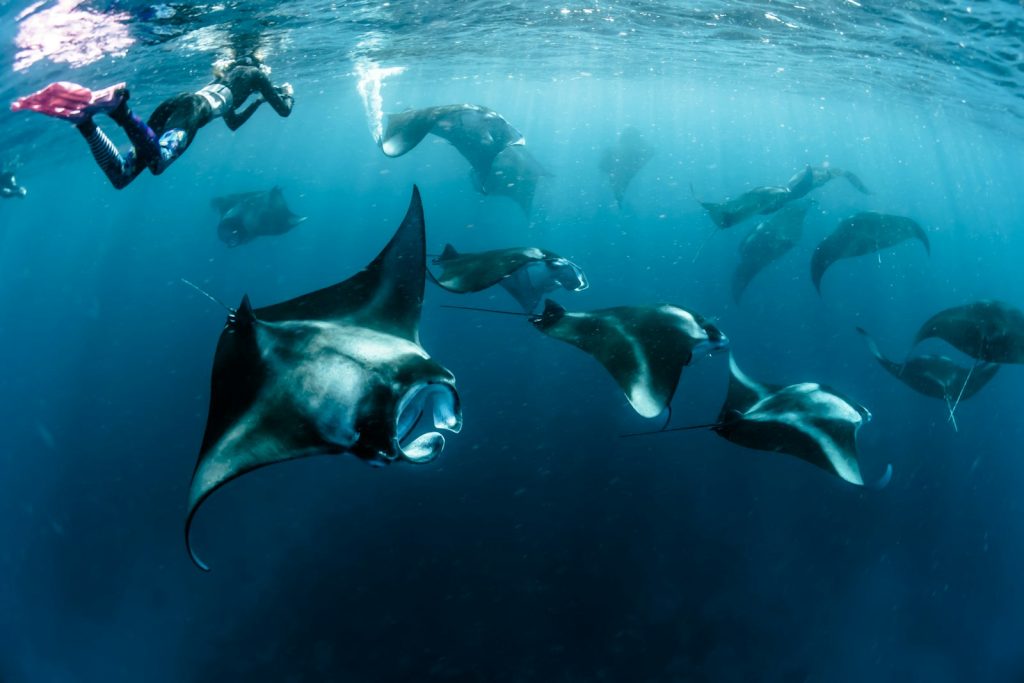
Komodo is famous for manta rays, especially in Central and, to a lesser extent, South Komodo.
Where we commonly see mantas:
- Central Komodo manta sites (e.g. cleaning stations & feeding channels)
- Type: Cleaning and feeding areas
- Typical action: Mantas circling bommies, gliding in current, sometimes chain-feeding
-
Seasonality: Present year‑round, but encounters are generally more frequent during the NW monsoon months (roughly Dec–Mar) when plankton blooms.
-
Southern sites (exposed points and channels)
- Type: Seasonally productive feeding zones
- Typical action: Fly‑bys or short feeding passes; less predictable than central
- Seasonality: More variable; productive during some cooler periods with richer upwellings.
Reality check:
• You can dive all the “right” sites and not see mantas on a given day.
• We plan tides and timing carefully, but no operator can guarantee manta encounters.
2. Reef Sharks & Bigger Fish
Komodo’s sharks are mainly reef species:
- White-tip reef sharks
- Black-tip reef sharks
- Occasional grey reef sharks at more exposed seamounts and corners
Where and how we see them most often:
- Northern slopes & seamounts:
- Sharks cruising along drop-offs, patrolling current edges.
-
Often mixed with dogtooth tuna, big-eye trevallies, and rainbow runners.
-
Central channels and corners:
- White-tips resting under ledges or circling over reef.
- Black-tips zig-zagging in the shallows at some sites.
Hammerheads are a different story:
- Hammerheads in Komodo:
- Reported seasonally at a few far/offshore and advanced sites when conditions line up.
- Deep, strong current, early-morning type dives.
- Even on dedicated hammerhead trips, sightings are not regular enough to be promised.
If your main dream is guaranteed hammerheads, Komodo should be just one piece of a broader Indonesian plan, not your only bet.
3. Turtles
If you like turtles, you’ll be happy in central Komodo.
- Green turtles: Common on reefs and slopes, often resting on ledges or in soft coral beds.
- Hawksbill turtles: Frequently feeding on sponges and coral, less shy around divers.
Expect to see turtles on most central reef dives, especially those with good overhangs and soft coral coverage.
4. Macro Life: Nudibranchs, Critters & “Small Weird Stuff”
Komodo is not just big animals and current. The macro can be excellent, especially on southern sites and some protected central slopes and night-dive locations.
Typical macro highlights:
- Nudibranchs: Chromodoris, Hypselodoris, Nembrotha, and many less common species
- Crustaceans:
- Cleaner shrimps, boxer shrimps
- Commensal shrimps on sea cucumbers and urchins
- Various crabs in bubble coral and soft coral
- Small fish and oddities:
- Thorny seahorses in rubble or on gorgonians
- Dragonets, gobies with shrimp partners
- Leaf scorpionfish
- Frogfish on some of the richer southern and central reefs
Less frequent but talked-about critters:
- Rhinopias (lacy or weedy scorpionfish): Seen in Komodo some seasons at certain sites, but rare. If we find one on a trip, we quietly manage traffic so it doesn’t get harassed.
Macro divers who are patient and experienced at spotting tend to get the most out of these dives. A private guide or small group helps; ask about this when you plan your trip.
What Fish Komodo Diving: Everyday Reef Life You’ll Actually See
Beyond the headliners, Komodo’s day-to-day fish life is what makes dives feel “full.”
Typical cast on many reef dives:
- Schooling reef fish:
- Fusiliers in big clouds
- Surgeonfish and unicornfish in mid-water lines
-
Big schools of snapper and sweetlips at bommies
-
Reef residents:
- Anthias carpeting corals in pink, orange, and purple
- Damselfish, chromis, and fairy basslets
-
Triggerfish, butterflyfish, and angelfish
-
Predators and hunters:
- Trevallies and jacks rushing through baitfish
- Groupers ambushing on bommies
-
Occasional dogtooth tuna at more exposed points
-
Cephalopods:
- Reef cuttlefish in central sites, especially in shallower coral gardens
- Reef squid occasionally in small groups
- Octopus (daytime and especially on night dives) hiding in rubble and under rocks
You’ll also see healthy coral cover in many areas: hard coral terraces in the north and central, and some very rich soft-coral-covered reefs particularly in the cooler southern water.
Night Diving: Komodo Marine Life After Dark
Night dives on our Komodo cruises are optional but highly recommended if you’re at least comfortable in the water and can maintain buoyancy without visual references.
Typical Komodo night‑dive marine life:
- Crinoid and decorator crabs
- Multiple nudibranch species in a single dive
- Spanish dancers (if you’re lucky)
- Squid and hunting cuttlefish
- Banded sea kraits and other nocturnal fish feeding
Conditions:
- Generally done at protected sites with mild or no current.
- Maximum depth kept conservative for safety.
- Ideal for photographers and macro enthusiasts.
Night dives are usually best appreciated by divers with at least 20–30 logged dives and calm control. If you’re unsure, talk with your guide on board; we adjust the plan by group comfort, not ego.
Komodo Marine Life by Season: What Changes, What Stays
Komodo is diveable year‑round, but the feel of the diving shifts through the year. The following is indicative, not a rigid schedule; monsoon patterns can vary.
- Roughly April – early November (typically drier months)
- Generally better visibility in many areas, especially north. Water temperatures can be a bit cooler in the south. Schooling fish and reef action are consistent. Some mantas still around, but plankton may be less dense in certain central spots.
- Roughly November – March (often more plankton & NW monsoon influence)
- Increased plankton in central can mean more frequent manta encounters, but sometimes reduced visibility. Stronger surface conditions on some days. Water in central/north often warmer. Macro in south can be excellent when we can access it safely.
- Year‑round constants
- Healthy reef fish communities, reef sharks, turtles, and solid macro on the right sites. Currents remain a defining factor throughout the year, especially on new/full moon periods.
Our cruise planning combines seasonality plus moon/tide cycles. For example:
- On strong tide days: We hit current-heavy sites with advanced groups or choose more protected alternatives for less experienced divers.
- On calmer tide windows: We can safely include more “showcase” current-influenced sites for capable intermediate divers.
If you want to align your holiday dates with the species you care about most, message us on WhatsApp (+62 811-3823-875) early; we can advise honestly on pros and cons of your target month.
Matching Trip Length & Experience to Marine Life Goals
Labuan Bajo Dive Cruise is operated by Komodo Luxury, a Komodo-focused company (founded 2015, parent Juara Holding Group Limited) with its own premium wooden phinisi fleet: Komodo Signature and Komodo Prestige. Both are full-crew, full-board, dive-focused vessels — not generic day boats.
We structure itineraries by trip length, certification, and interest, not just “X days = Y dives.”
Indicative overview (actual plans are tide- and guest-dependent):
| Trip Length | Typical Dive Focus* | Who It Suits Best |
|---|---|---|
| 3 days / 2 nights | Central Komodo highlights: mantas (if in season), turtles, colorful reefs, 6–8 dives | Holidaymakers & newer certified divers wanting Komodo “greatest hits” without extreme currents |
| 4–5 days | Central + selected north or south sites (conditions-dependent), ~10–14 dives | Enthusiastic divers who want mantas + some current action or some serious macro |
| 6–8+ days | Full loop potential: north, central, south (weather/tides allowing), 16+ dives | Experienced divers prioritizing marine life variety, macro + big fish, and flexible routing |
*Actual sites and dive counts vary with conditions, certification levels on board, and park regulations.
Minimum Experience Guidelines
On our liveaboards, we’ll always ask your experience and certification first, because some “bucket list” marine-life dives are not appropriate for beginners:
- Beginner / Newly Certified Open Water (0–20 dives):
- Central Komodo in mild to moderate current, guided closely.
- Focus on reefs, turtles, possible mantas, gentle drifts.
-
We avoid the most demanding current sites for safety.
-
Intermediate (20–60 dives, comfortable in light–moderate current):
- Wider choice in central and some northern/southern sites when tides allow.
- Suitable for many manta encounters and some exciting drift dives.
-
Night dives possible if your buoyancy is reliable.
-
Advanced / 50+ dives with strong current experience:
- Able to enjoy “high-energy” dives in north and some advanced seamounts or channels.
- Better chances at schooling pelagics and more challenging sites.
- Potential to attempt deeper or early-morning “big fish” dives (still with no species guarantee).
We can also arrange private guides, nitrox (where available), and flexible buddy teams to match your pace. Mention your experience honestly when you plan your trip; it helps us keep the group safe and get you on the right dives.
Park Rules, Fees & Conservation Reality
Komodo National Park is managed by Indonesian authorities with a focus on conservation and controlled tourism:
- Marine park fees and permits:
- Fees vary by nationality, activity (diving, trekking, camera fees), and day of week.
- As a ballpark (last verified June 2026), total daily costs for a diver usually land in the tens of US dollars per day, but this can change.
-
Always check with us for the latest structure; regulations are subject to updates.
-
Why fees and rules exist:
- To manage the impact of growing visitor numbers.
- To support park staff, rangers, and infrastructure.
- To protect both terrestrial and marine environments, including the coral reefs and fish life you’re coming to see.
On board, we brief all guests on:
- No touching or chasing mantas, turtles, sharks, or anything else.
- Careful finning to avoid coral damage, especially in shallow mantas stations.
- Buoyancy practice before sensitive dives if needed.
Komodo’s marine life is under pressure like any modern reef system, but with competent guiding, respectful behavior, and park enforcement, it remains one of Indonesia’s most rewarding marine areas to dive.
Pricing & What’s Included on a Komodo Marine-Life Cruise
Labuan Bajo Dive Cruise is a premium, dive-focused product operated by Komodo Luxury, not a budget backpacker trip. Prices depend on:
- Season and demand
- Trip length and cabin category
- Full charter vs shared charter
- Optional upgrades (e.g. private guide, nitrox where available)
As an indicative range (last verified June 2026):
- Per-person liveaboard packages for multi-day dive cruises in Komodo on our luxury phinisi typically run from the mid hundreds to low thousands of US dollars per person for a cruise, depending heavily on duration and level of luxury.
Park fees are usually additional and paid as per current regulations. Flights to Labuan Bajo are not included.
To get a specific quote for the dates and marine life focus you want, contact our team at [email protected] or WhatsApp +62 811-3823-875 and we’ll break down options clearly.
Why Choose Labuan Bajo Dive Cruise for Komodo Marine Life Diving
A few concrete reasons serious divers choose us for Komodo dive species encounters:
- Operator with a track record:
- Komodo Luxury has focused on Komodo since 2015 under Juara Holding Group Limited.
-
Recognised with TripAdvisor Travelers’ Choice awards in 2025 and 2026 based on verified guest feedback.
-
Own premium phinisi fleet:
- Komodo Signature and Komodo Prestige are purpose-run liveaboards, not borrowed day boats.
-
Cabins with AC, proper gear setups, compressor on board, dive tenders for safe site drops and pickups.
-
Itinerary built around currents, not just marketing:
- We plan dives around tides and guest ability, not just “we always go here.”
-
Strongly current-affected sites are treated as advanced dives, not casual checkouts.
-
Realistic wildlife expectations:
- We highlight best sites and seasons for mantas, macro, and big fish.
-
We never guarantee mantas, hammerheads, or any specific species on a set day.
-
Dedicated dive pros:
- PADI professionals on board for guiding and safety.
- Briefings that actually explain current patterns, entry/exit plans, and emergency procedures.
If you want a dive-cruise that treats you like a diver first and a tourist second, start a plan with us via plan your trip or WhatsApp and we’ll map a realistic, safe, and rewarding itinerary.
FAQs: Komodo Marine Life Diving
Is Komodo good for beginner divers?
Parts of Komodo are fine for newer divers, especially in central areas on mild tides, but many famous sites have strong currents and are not suitable for absolute beginners. If you’re recently certified, we usually recommend central-focused itineraries, conservative depth limits, and sometimes a private guide so you can enjoy the marine life without stress.
What month is best to see mantas in Komodo?
Manta rays are present all year, but encounters at key central manta sites are often more frequent during the roughly November–March period when plankton blooms are common. That said, we see mantas in other months too. No month offers guaranteed manta sightings, so plan for overall marine life quality rather than a single species.
Will I see sharks when diving in Komodo?
Reef sharks (white-tip and black-tip, with occasional grey reefs) are regularly seen at many Komodo sites, particularly in north and central areas with good current. Numbers and exact species vary by site, tide, and time of day. Hammerheads are rare and highly seasonal; treat any sighting as a bonus, not an expectation.
Is Komodo mainly macro or big-fish diving?
Komodo offers both. Central and northern regions lean towards big-fish and schooling action with healthy reef life, while some southern and selected central sites deliver excellent macro: nudibranchs, crustaceans, frogfish, and other critters. The best trips are mixed itineraries where you get mantas and sharks on some dives, and then slow down for macro and night dives on others.
How many dives will I do on a Komodo liveaboard cruise?
It depends on trip length and conditions. As a rough guide, our multi-day cruises typically aim for 3–4 dives per full dive day, with fewer on embarkation and disembarkation days. So a 4-day trip might give around 10–12 dives, and a week-long trip significantly more. Exact counts depend on weather, currents, and your own comfort and safety.
For a tailored breakdown based on your experience, travel dates, and target species, contact us via WhatsApp at +62 811-3823-875 or plan your trip and we’ll walk you through realistic options.